05 October 2026
Colors the Earth Gives – Plant Dyes and Handspun Cotton from Thailand

Plant dyeing is more popular than ever. Here in Thailand, too, where nature offers a huge palette of colors. And yet it's nothing new. Long before chemical dyes existed, people colored cloth with what nature gave them: leaves, bark, wood, blossoms, soil.

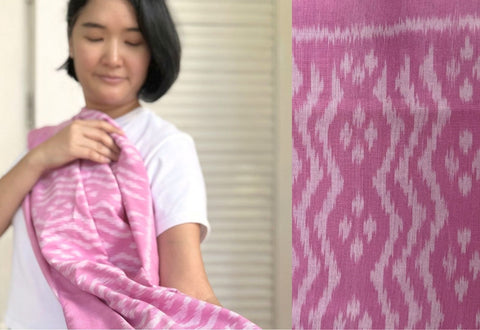
In the north of Thailand, this knowledge is still alive. Cotton is spun by hand, dyed with plants and woven on traditional looms. Every shade depends on what nature offers at that moment, so no color can ever be repeated exactly.
WHAT ARE NATURAL DYES?
Natural dyes are colors made from plants and minerals instead of synthetic chemicals. In Thailand, weavers boil bark, wood, leaves or fruit in large kettles and simmer the yarn until it takes on the shade they want. Season, raw material, water and light all change the result. That's why two batches of the same plant dye never look quite the same.

COLORS FROM NATURE
These are the dye sources our weavers work with:
- Kaew: mustard yellow from tree bark
- Fang: deep crimson from the wood of the fang tree (sappanwood)
- Linchee + Kram: olive green from lychee combined with indigo
- Pradu: warm copper-brown from pradu wood (Burma padauk)
- Kram: rich indigo, a Southeast Asian classic
- Mango leaves: used for green tones
- Dam: black from natural earth or charcoal
A quick note on green: Some very intense shades, like certain greens, get an additional tested, eco-friendly pigment for more depth of color. So not every shade is 100% plant. We'd rather tell you that than leave it out.
HANDSPUN: PATIENCE IN THE THREAD
Before any dyeing begins, the yarn is made entirely by hand. The women organize the whole process together: they spin the cotton, dye it in large kettles, hang it up to dry, and finally weave it on traditional looms. Handspun yarn is slightly uneven, and that's exactly what gives the fabric its warm, textured feel.
"It always takes a little time – but it's worth the wait, isn't it?"
– Pla, our partner for handmade cotton in Thailand
ONCE A COLOR IS GONE, IT'S GONE
We work with our partner Pla, who stays in close contact with the weaving groups and tells us which shades are currently available. When a color is sold out, it may never come back in exactly the same form. If you fall for a scarf, don't wait too long.

WHY IT MATTERS TODAY
Plant dyes aren't a short-lived trend. They're cultural heritage. They connect the landscape with the craft, use local resources, and keep a practice alive that would otherwise slowly disappear. A naturally dyed, handspun scarf is a piece of Isaan you can wear: you can see it, feel it, and wrap yourself in it.
OUR PLANT-DYED SCARVES
The blue in these handspun cotton scarves comes from kram, natural indigo:
- Handspun Cotton Scarf · Raw Indigo · 40 × 200 cm
- Handspun Cotton Scarf · Indigo Caramel · 40 × 200 cm
- Handspun Cotton Scarf · Ocker Indigo · 80 × 200 cm
- Handspun Cotton Scarf · Blush Pink & Indigo · 40 × 200 cm
And in soft, warm tones:
- Plant-Dyed Cotton Scarf · Dusty Rose · 40 × 200 cm
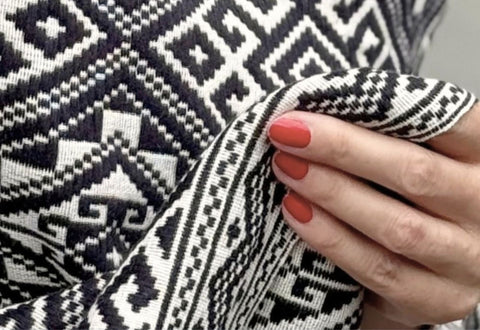
- Handspun Cotton Scarf · Brown Ivory · 80 × 200 cm, plant-dyed in deep brown and natural ivory
FREQUENTLY ASKED QUESTIONS
Which plants are used for natural dyes in Thailand?
Common Thai dye sources include indigo (kram) for blue, sappanwood (fang) for red, pradu wood for copper-brown, mango leaves for green and tree bark for yellow. Mixing them creates further shades, like olive green from lychee and indigo.
Are all colors 100% plant-based?
Most of them, but not all. Some very intense shades, like certain greens, get an additional tested, eco-friendly pigment for more depth of color.
What is handspun cotton?
Handspun cotton is yarn spun by hand instead of by machine. It's slightly irregular, which gives the woven fabric more texture and character than factory yarn.
Why does the color vary from piece to piece?
Natural dyes react to the season, the raw material, the water and the light. Every batch turns out a little different, so each scarf has its own shade.
DISCOVER THE PIECES
→ Shop the collection: Scarves & Textiles
→ Read more: What is Khit weaving?
→ Looking for a gift? Gifts for People Who Love Other Cultures
Rare Finds. Real People.