

15 Aug What Is Fish Leather?
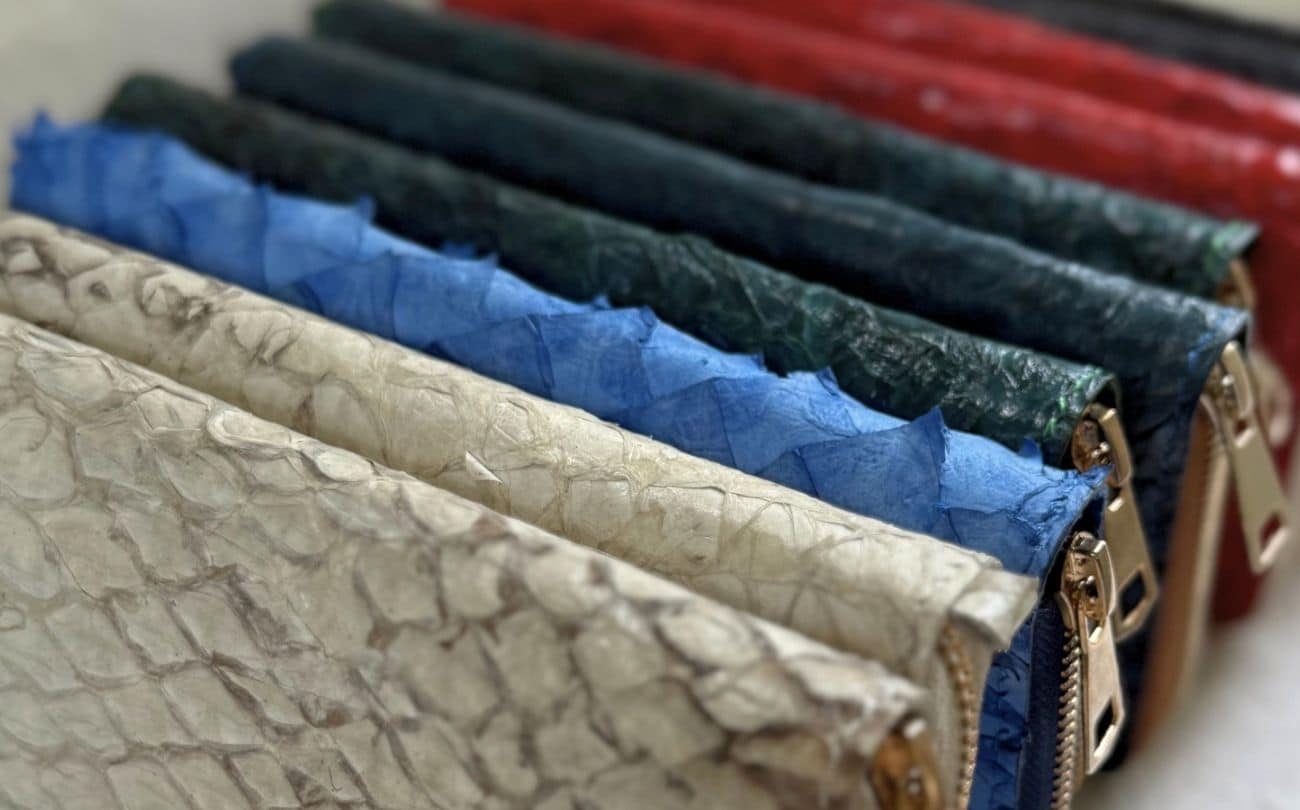
Fish leather is real leather tanned from fish skin instead of cowhide, goatskin, or sheepskin. Once tanned, the skin keeps its natural scale pattern, so every piece looks slightly different. It’s not a mass-produced material. It’s closer to a natural material with its own character, piece by piece.
The most common fish used are salmon, tilapia, carp, trout, Nile perch, and stingray. Most of these skins are a byproduct of the food industry, meaning skin that would otherwise be thrown away gets turned into a durable, high-quality material. That’s a big part of why fish leather is considered one of the more sustainable leather alternatives around.
Is Fish Leather Actually Durable?
A lot of people assume that something this thin has to be fragile. It’s actually the opposite. Fish leather owes its strength to how the fibers are arranged. Cowhide has collagen fibers that run in parallel lines, but fish skin has fibers that cross each other, almost like a woven grid. That crosshatch structure spreads tension across multiple directions instead of concentrating it along one line.
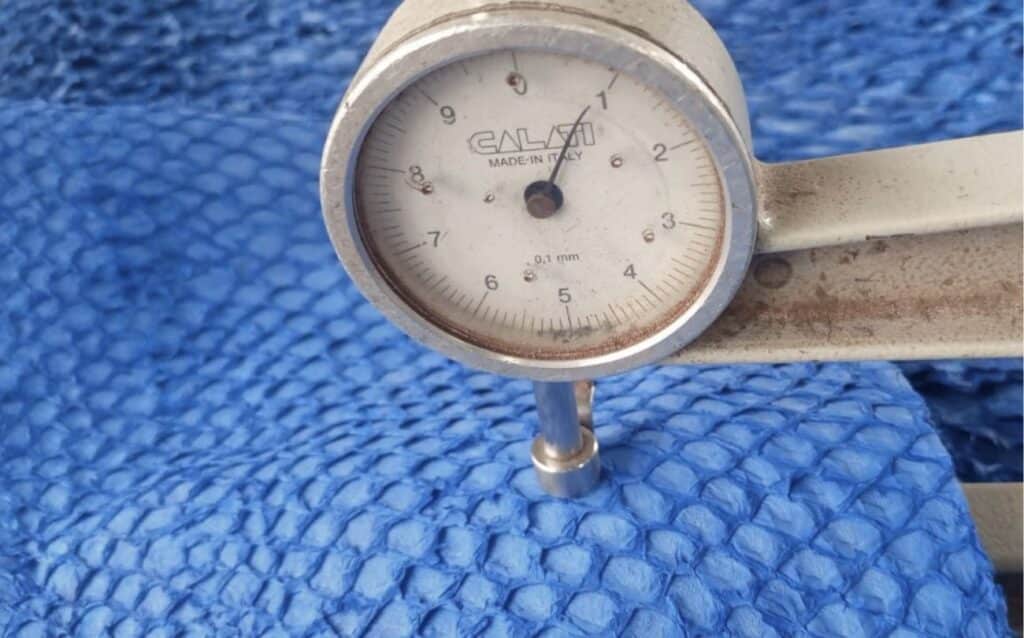
The numbers back this up. Fish leather can reach a tensile strength of up to 90 newtons, while cowhide of the same thickness typically maxes out around 8 to 25 newtons. In practice, that means fish leather can be up to nine times more tear-resistant than cowhide. Salmon and perch leather, including Nile perch, tend to rank among the strongest.
Types of Fish Leather Compared
| Type | Look | Properties | Common Uses |
|---|---|---|---|
| Nile Perch | Bold, large scale pattern | Very tear-resistant, medium thickness | Wallets, bangles, bags, jewelry |
| Salmon | Fine, even scales | One of the strongest fish leathers | Small leather goods, accessories |
| Tilapia | Tight, dense scale texture | Sturdy and widely available | Wallets, small bags |
| Stingray | Pearl-like, very hard surface | Extremely scratch-resistant, no classic scale look | Belts, handles, cases |
| Carp / Trout | Varies by species | Thinner, good for delicate pieces | Jewelry, small accessories |
Where Does Fish Leather Come From?
Turning fish skin into leather isn’t new. It’s a centuries-old craft that goes back to indigenous coastal communities from Siberia to Alaska to Scandinavia. Today, small specialized workshops around the world are reviving the technique, often with a specific goal in mind: putting fish processing waste to good use instead of letting it go to landfill.
One example is Ambani Fish Leather in Kenya. After a severe drought hit the region, food aid from the FAO (Food and Agriculture Organization) left behind large quantities of fish skin with nowhere to go, and it was being discarded. Ira and James Ambani saw an opportunity there and started experimenting with turning that skin into leather, aiming to build local income and a more sustainable way of life. What began as kitchen table tests grew into a workshop that now employs around 20 people across two locations, turning Nile perch skin into wallets, bangles, earrings, and bags. Nothing goes to waste. Even small offcuts get used, often for earrings.
You can read the full story of Ambani Fish Leather, from the drought to the workshop in Kenya, in our journal piece [The Story Behind Ambani Fish Leather].
Is Fish Leather Sustainable?
Fish leather tends to be gentler on resources than most leather alternatives. It puts a food industry byproduct to use rather than letting it go to waste, needs relatively little material per skin, and is often produced in small, hands-on workshops that lean toward fair working conditions and plant-based or low-impact tanning methods.
The Bottom Line
Fish leather brings a distinctive look, surprising strength, and a genuinely sustainable backstory. Buy a piece made from it and you’re not just getting a durable accessory. You’re often getting a small piece of craft history from a workshop that does things differently.
No Comments