

10 Feb When Hunger Came – And Innovation Followed
Northern Kenya has experienced years of severe drought. For many communities around Lake Turkana — the world’s largest desert lake — traditional livestock farming became increasingly fragile.
Fishing gradually emerged as a new livelihood. With support from development initiatives, infrastructure improved: boats, nets, cooling systems, training. A regional shift began — from pastoralism to fishing and processing.
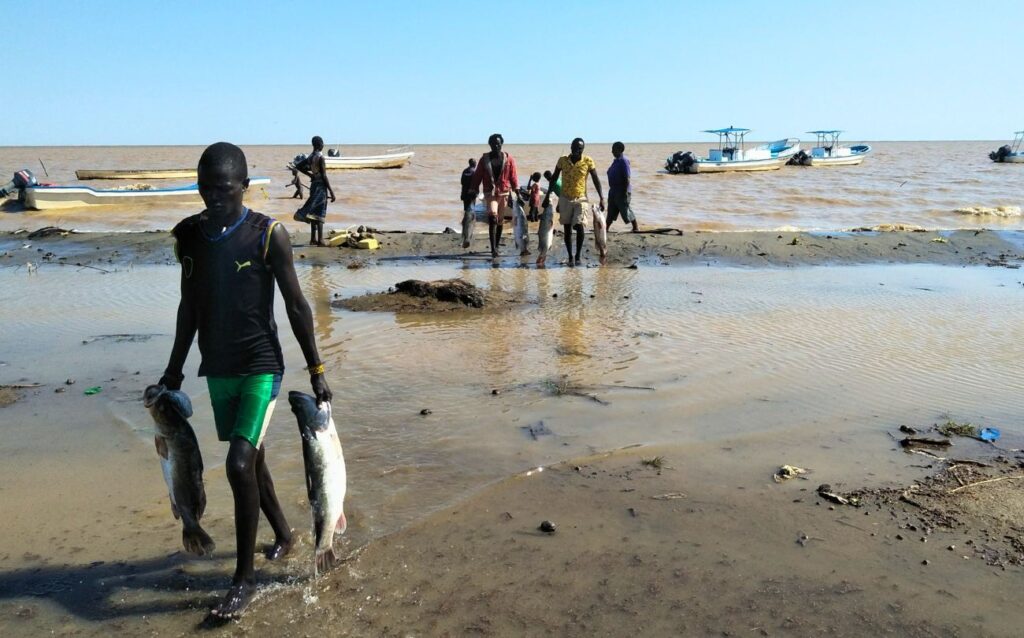
As fishing infrastructure expanded in the region — supported by international initiatives such as the Food and Agriculture Organization of the United Nations (FAO) and the World Food Programme — new economic pathways opened.
With every catch, however, large quantities of fish skin were discarded.
Most saw waste.
Ira and James Ambani saw material.
From Fish Skin to Leather
The idea was simple — and radical: Could Nile perch skin be transformed into leather?
Fish leather is not new. In fact, it has been used for centuries in countries such as Iceland. But in Northern Kenya, the knowledge and infrastructure had to be developed further and refined.
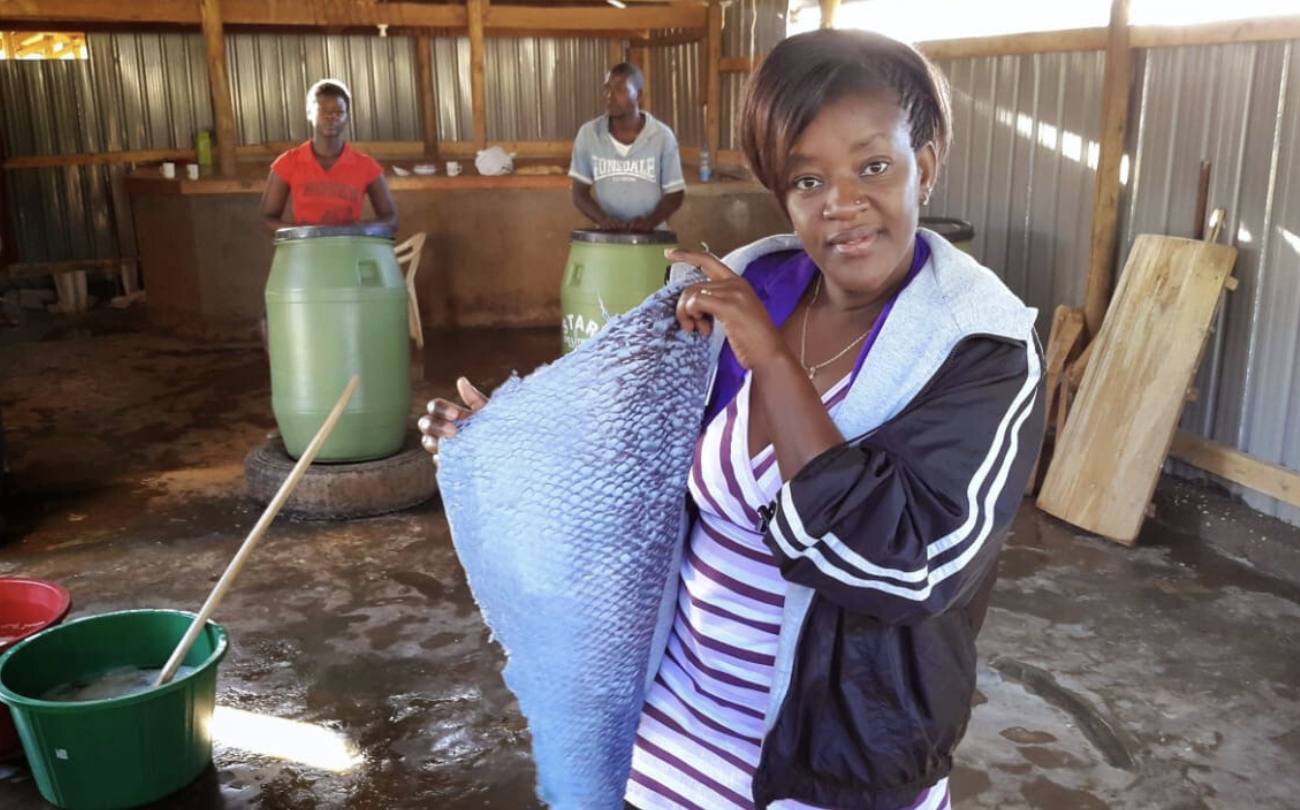
The first attempts were improvised. Skins were cleaned by hand, experiments were made, techniques refined. Over time, tools improved. Training followed. Processes matured.
Today, Ambani Fish Leather operates clean, structured workshops where fish skin is transformed into durable, distinctive leather — defined by its natural scale pattern and remarkable strength.

Often described in international media, including the BBC, as pioneers of modern fish leather craftsmanship in East Africa, Ambani has helped establish fish leather as a refined material rather than a by-product.
AMBANI FISH LEATHER TODAY
Ambani Fish Leather now employs more than twenty people across two locations — most of them women.
What began as experimentation has evolved into skilled craftsmanship. Skins are washed, tanned, dyed and finished with precision. Each piece shows natural variation — no two textures are alike.
WHY WE CHOSE AMBANI FISH LEATHER
At SoRarePieces, we work curatorially. We look closely at material, process and structure. We are interested in craftsmanship with integrity — and in enterprises that build long-term value through innovation.
Ambani is not a charity product.
It is material intelligence shaped through resilience.
Fish leather represents transformation — not as a slogan, but as a process: from discarded skin to refined accessory. From regional challenge to global relevance.
Today, pieces made in Turkana travel beyond Kenya — into independent boutiques, fashion shows, curated collections and into our Ambani selection at SoRarePieces.
Discover the Collection
Explore our Ambani Fish Leather pieces:
→ Round Earrings
→ Key Loops
→ Wallets
Each item carries the natural scale pattern of the fish — unmistakable and entirely unique.
Further Reading
→ Why Fish Leather Is Structurally Different
→ When Hunger came – The Ambani-Story
SEE THE MATERIAL IN MOTION
→ Youtube: Watch selected workshop insights and media features in our Ambani video playlist.

Pingback:Why Fish Leather is structurally different - So Rare Pieces
Posted at 04:45h, 26 February[…] From Waste to Wonder – The Ambani Story→ Golden Perch: Regional Context→ Behind the Pieces: Ambani Fish […]
Pingback:The Golden Perch – A Fish That Changed Everything - So Rare Pieces
Posted at 06:19h, 05 March[…] → Explore the Ambani Collection→ Discover the Story of Fish Leather […]