

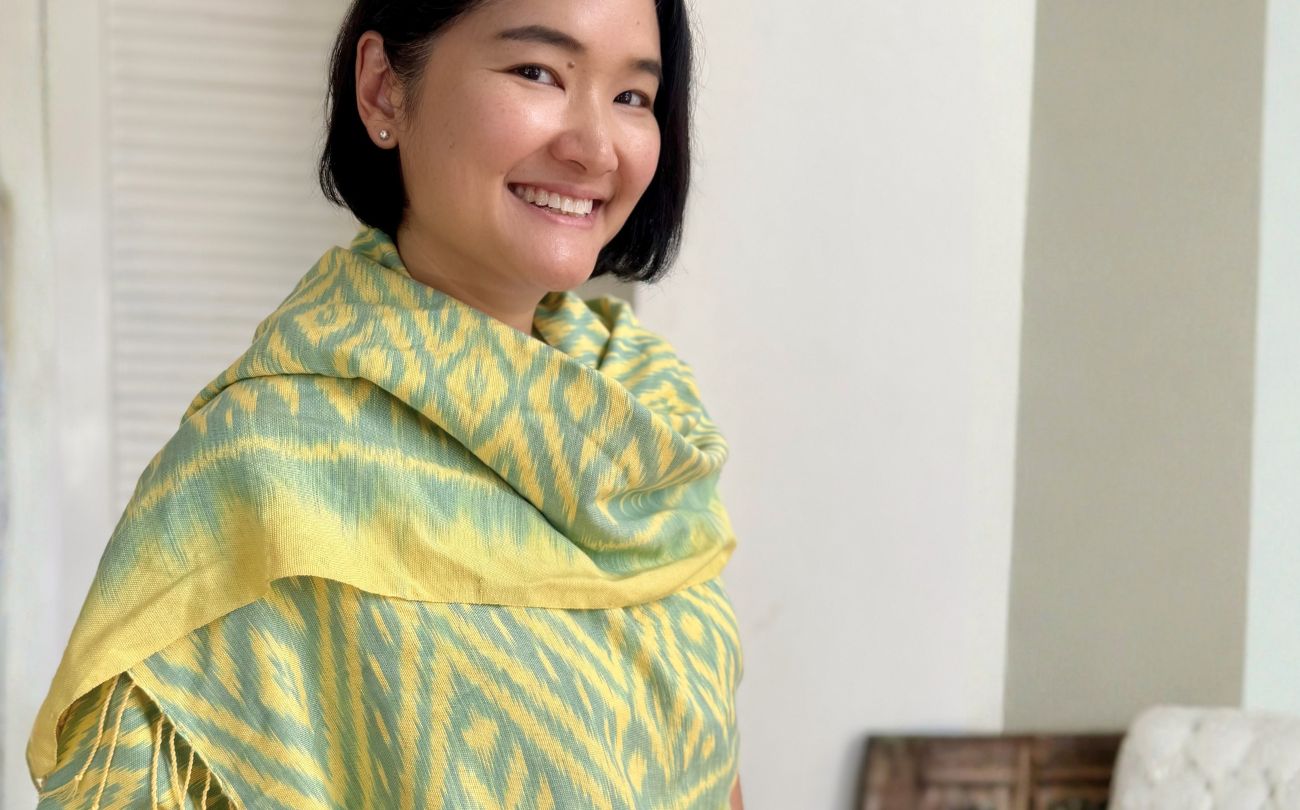
14 May Ikat — A Craft That Tells You Where It Comes From
Ikat is one of the oldest weaving techniques in the world, and one of the most widespread. You find it in Central Asia, Japan, India, Guatemala, Indonesia. The word itself comes from the Malay-Indonesian mengikat: to tie, to bind.
UNESCO notes that Ikat most likely developed independently across different cultures, with no single point of origin. And yet the patterns always tell you immediately where a piece comes from. Every region, every village, every weaver leaves a different mark.
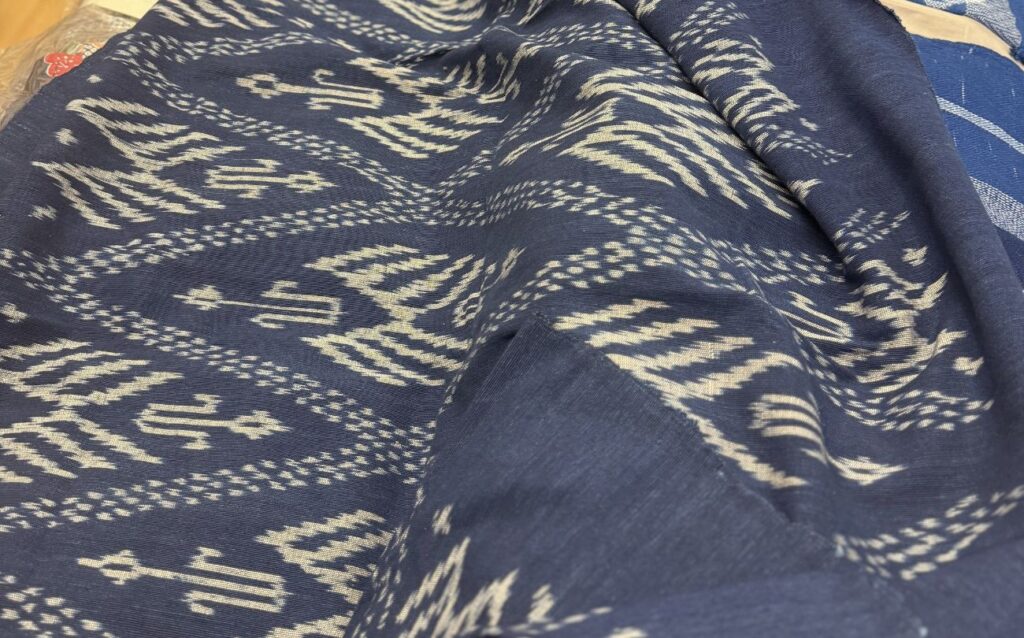
At SoRarePieces, we source Ikat textiles from different partners, each with their own story and their own visual language. Light, fine, fluid scarves. And heavier, dark, luminous pieces in indigo.
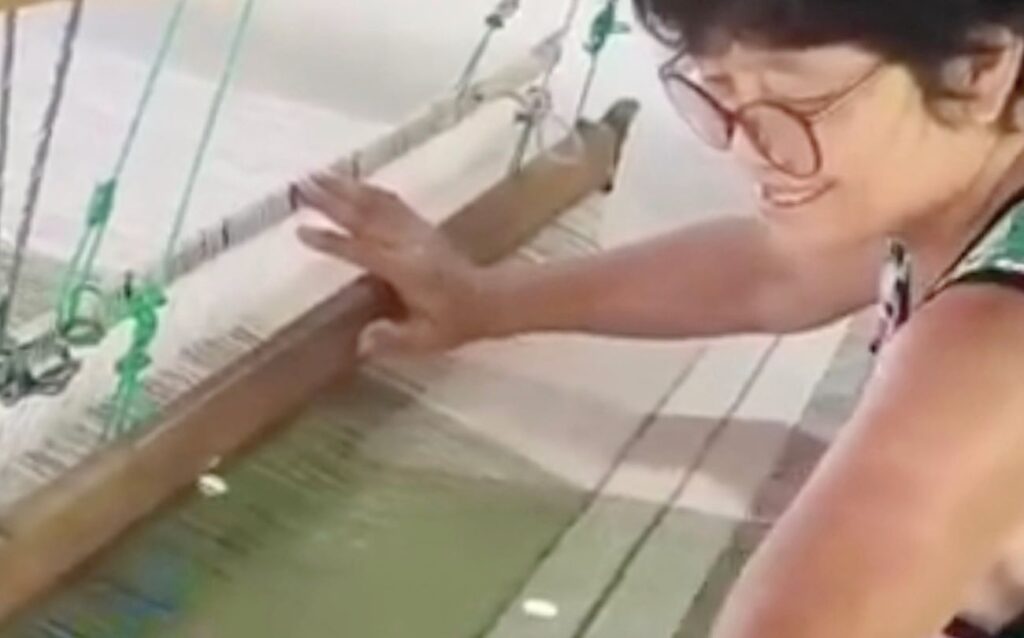
Nantana is an older woman who knows a great deal about Ikat. Her family has practised this craft in northern Thailand for generations, and she loves passing it on, including to travellers who are genuinely curious. But many people simply don’t know it, she says. Or they don’t have the patience and the dexterity. You have to learn it.
How does Ikat work, and what makes it so special?
Ikat does not begin at the loom but long before: Every single cotton thread is tied and dyed by hand, layer by layer, colour by colour. Only then does it reach the loom.
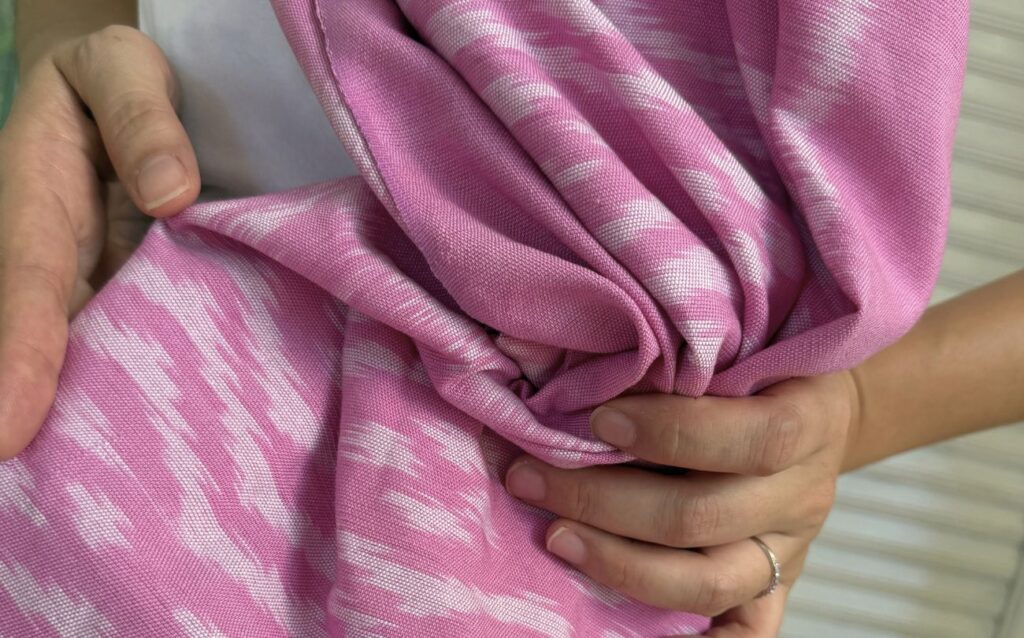
The result is a soft blurring at every edge of the pattern. It is the signature of Ikat, the proof that this particular pattern exists exactly once. In Thailand, this technique is called Mudmee, passed down through generations of women, and historically worn for ceremonies, festivals and special occasions.
At SoRarePieces, we bring you a range of Ikat textiles. The lighter ones make beautiful scarves, for a special occasion or simply as a beloved everyday piece. The heavier ones lend themselves wonderfully to other uses: home décor, cushion covers, bed throws.
Discover the Pieces
→ Shop the Collection here: Ikat Pieces from Thailand
See the Material in Motion
→ Youtube: Watch selected videos of the fabrics in Motion
→ Follow @sorarepieces
Further Reading
→ Textiles and Clothing along the Silk Roads — the UNESCO publication we referenced in this article — is available as a free download directly from UNESCO.
→ For those who want to go deeper: Global Ikat: Roots and Routes of a Textile Technique, edited by Rosemary Crill, traces the full global story of this technique — from Japan to Central America, from India to Southeast Asia. The first time all iterations of Ikat have been brought together in one volume.
→ And for the broader world of textile exchange across cultures: Global Textile Encounters by Marie-Louise Nosch, Zhao Feng and Lotika Varadarajan is a beautifully readable introduction to the world of textile exchange across cultures.*
*This post contains affiliate links. If you buy through them, we may earn a small commission — at no extra cost to you. We only recommend things we genuinely find worth exploring.
No Comments